From Competitive Intelligence to Market Opportunity Discovery Using AI Agents
Traditional competitive intelligence often stops at benchmarking. AI marketing agents extend this capability by systematically uncovering untapped B2B opportunities through advanced data synthesis, gap analysis, and predictive modeling.
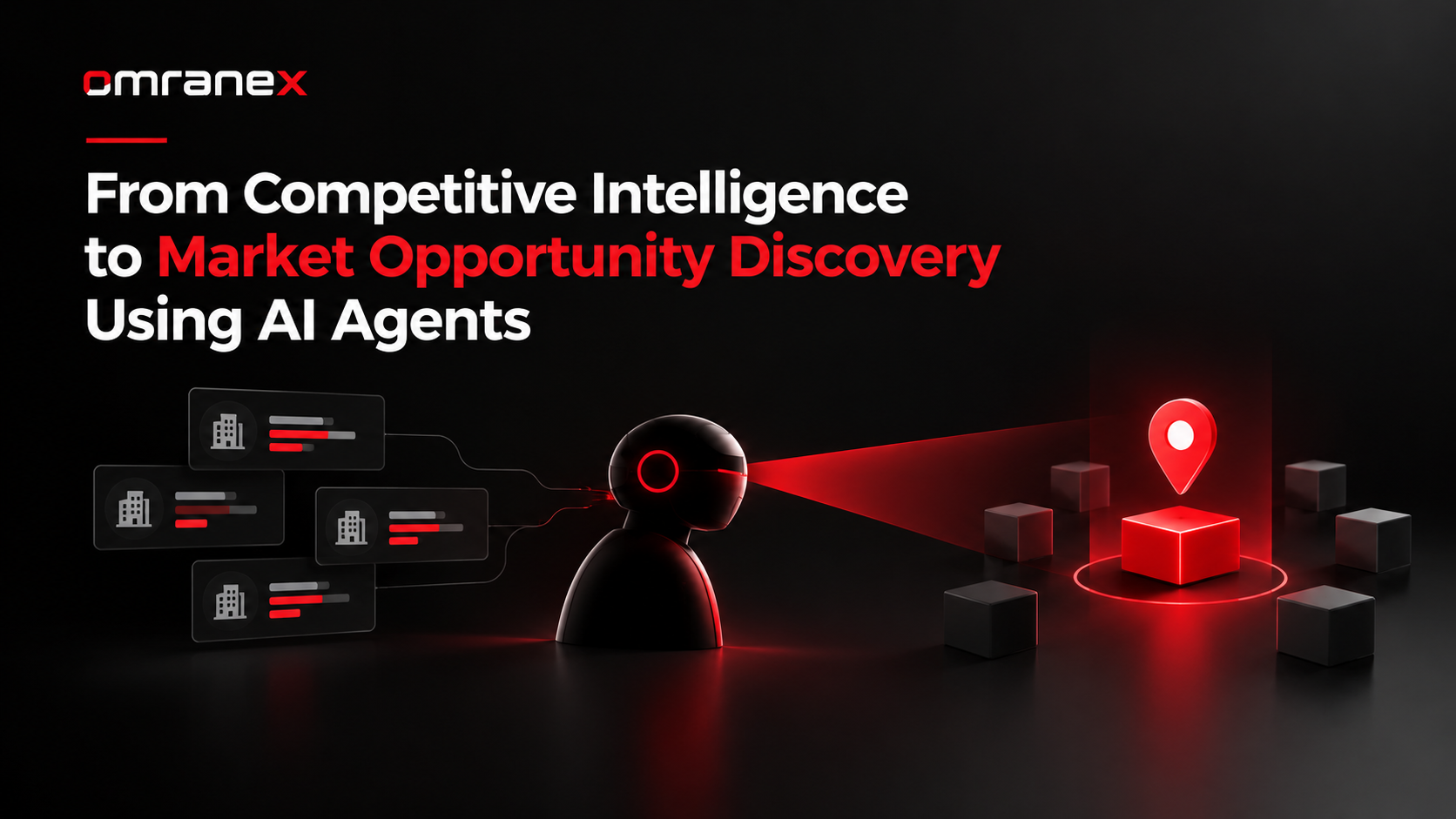
The core challenge for modern B2B organizations is the transformation of raw competitive data into actionable market opportunities. In complex markets, the volume of signals—customer behavior, partner movements, emerging technologies—exceeds human analytical capacity. Without a structured process to convert intelligence into strategic insight, firms risk either over‑investing in saturated segments or missing latent demand that could drive sustainable growth.
Evolution of Competitive Intelligence in B2B Contexts
Historically, competitive intelligence relied on manual gathering of public filings, press releases, and industry reports. This approach provided descriptive snapshots but limited predictive power. The shift toward market opportunity discovery demands a more dynamic capability: the continuous identification of gaps, emerging needs, and unmet demand signals across the buyer journey. AI agents now operate as extensions of this process, ingesting heterogeneous data streams—social listening, account‑based metrics, third‑party market research—and applying natural‑language understanding, clustering, and scenario modeling to surface patterns that would otherwise remain hidden.
AI Marketing Agents as Engines of Opportunity Discovery
AI marketing agents combine autonomous data acquisition with hypothesis‑driven analysis, enabling organizations to move from reactive monitoring to proactive exploration. Their workflow typically includes:
- Real‑time ingestion of firmographic, technographic, and behavioral data from internal CRM, ERP, and external sources.
- Contextualized sentiment analysis across B2B communication channels to detect shifting priorities.
- Gap analysis that juxtaposes customer pain‑point frequencies with competitor feature sets.
- Scenario generation that projects market evolution under alternative technology adoption curves.
By automating these steps, AI agents reduce latency between signal detection and strategic decision‑making, allowing B2B marketers to allocate resources to the most promising opportunities before competitors can respond.
"The true value of AI agents lies not in the volume of data they process, but in their ability to synthesize disparate signals into a coherent map of latent demand that can be acted upon with precision."
The core insight is that opportunity discovery is a systematic, data‑driven discipline rather than a serendipitous event. When AI agents are governed by clear analytical objectives, they produce reproducible insights that can be validated against market outcomes.
Methodological Framework for Data‑Driven Market Gap Analysis
A robust framework for uncovering untapped B2B opportunities integrates three analytical layers:
- Signal Layer – Capture granular indicators of customer intent, technology adoption, and ecosystem changes.
- Pattern Layer – Apply machine‑learning models to cluster signals, identify emerging segments, and rank potential demand intensity.
- Validation Layer – Cross‑reference agent‑derived hypotheses with historical performance data, pilot test results, and expert judgment to confirm viability.
This layered approach ensures that insights are both granular and defensible, supporting governance mechanisms that align AI‑generated opportunities with corporate strategy and risk tolerance.
Governance and Adaptation in Complex B2B Environments
Complexity demands governance that balances autonomy with oversight. Effective governance includes:
- Defined scope and data provenance for AI agents, ensuring compliance with regulatory and privacy constraints.
- Continuous monitoring of agent performance metrics, such as signal‑to‑insight conversion rates and opportunity validation accuracy.
- Iterative refinement loops that incorporate market feedback, adjusting agent objectives as competitive dynamics evolve.
Adaptation is facilitated by a feedback‑rich architecture where strategic decisions are logged and fed back into the agent training pipeline, creating a learning loop that enhances future opportunity identification.
The OMRANEX Perspective
OMRANEX asserts that intelligence for complex business problems requires a disciplined blend of advanced analytics and robust governance. AI marketing agents are a critical component of this ecosystem, offering systematic discovery of untapped B2B opportunities while maintaining the rigor needed for strategic confidence. Organizations that embed these agents within a structured intelligence framework—grounded in data provenance, continuous validation, and adaptive governance—will be better positioned to navigate uncertainty, capitalize on emerging market gaps, and sustain growth in an increasingly competitive landscape.