Marketing Intelligence: Navigating Complexity and Uncertainty in Decision-Making
Effective marketing intelligence transforms raw data into actionable insight, enabling leaders to understand complex market dynamics, adapt to uncertainty, and govern intelligence assets responsibly.
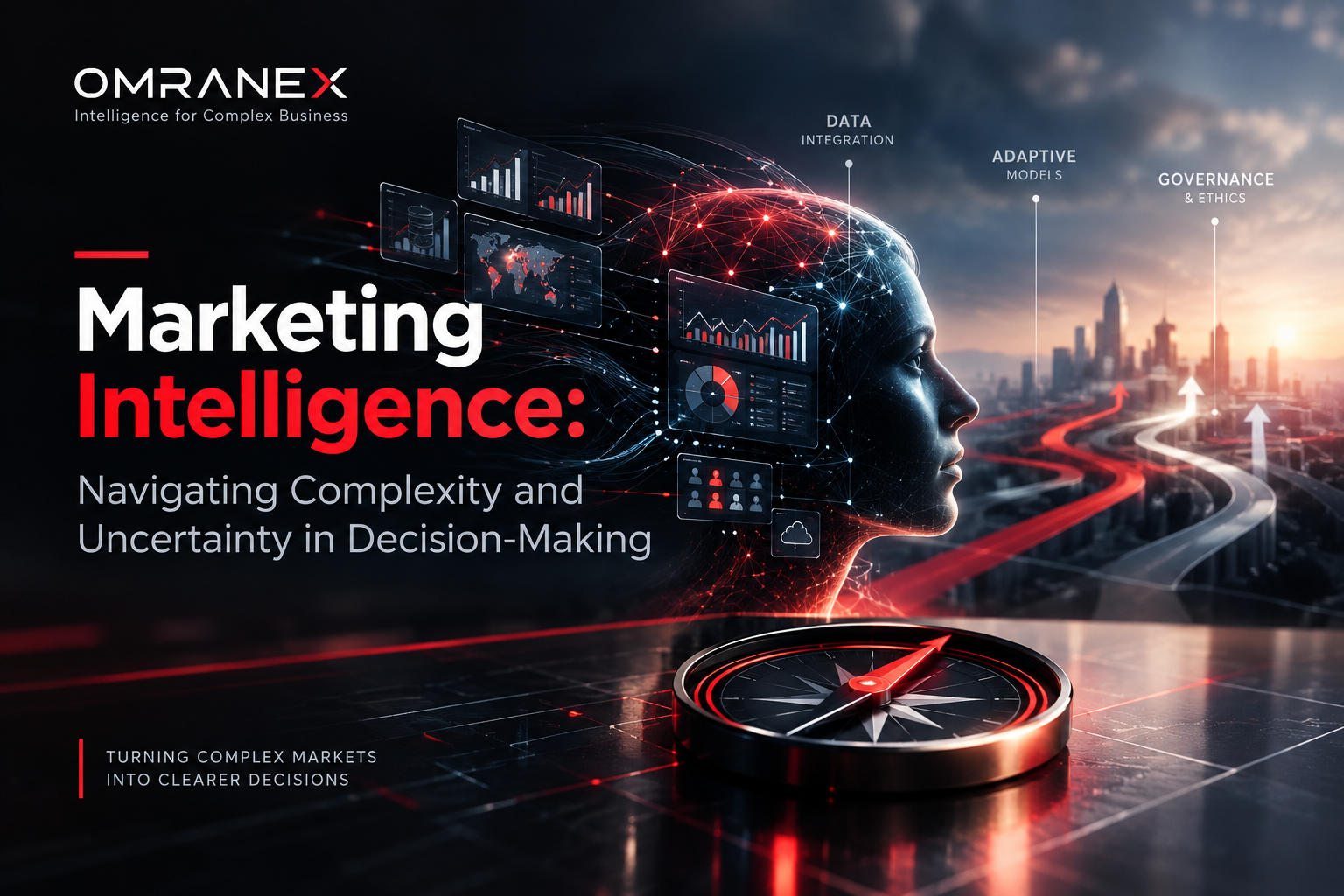
Organizations increasingly rely on marketing intelligence to allocate budgets, prioritize campaigns, and forecast demand. In practice, the promise of data‑driven decisions is often undermined by fragmented sources, overlapping signals, and rapid market shifts. The core business problem is not the scarcity of data but the inability to synthesize disparate information into a coherent, governable foundation for strategic action.
The Foundations of Marketing Intelligence
A robust intelligence framework begins with data quality and provenance. High‑velocity inputs from digital channels, CRM systems, and third‑party datasets must be standardized before analysis. Without a common schema, downstream modeling suffers from bias and inconsistency. Additionally, establishing clear ownership of data assets reduces duplication and clarifies accountability across functional silos.
Complexity and Data Integration
Modern markets generate multi‑layered signals that interact in non‑linear ways. Integrating these signals requires more than technical ETL pipelines; it demands a holistic architecture that captures relationships across channels, customer segments, and external factors such as economic indicators. The following points illustrate common integration challenges:
- Disparate data formats impede real‑time consolidation.
- Legacy systems lack APIs to expose granular metrics.
- External data sources vary in reliability and update frequency.
- Cross‑channel attribution models conflict, leading to double‑counting.
Addressing these challenges involves adopting a federated data model that preserves source context while enabling unified querying. A middleware layer can normalize inputs, enforce quality checks, and provide a single version of truth for downstream consumption.
Uncertainty Management through Adaptive Models
Uncertainty is inherent in marketing outcomes due to competitive actions, consumer sentiment shifts, and emerging technologies. Adaptive models mitigate this risk by continuously learning from new observations and recalibrating predictions. Key practices include:
- Deploying Bayesian updating to incorporate prior knowledge with fresh evidence.
- Using scenario‑based simulation to explore alternative futures.
- Implementing real‑time A/B testing to validate hypothesis changes.
- Applying ensemble methods that combine multiple algorithms to reduce variance.
Intelligence without governance is exposure. — OMRANEX Core Principle
Adaptive modeling also requires transparent documentation of assumptions, data drift detection, and rollback mechanisms. When models operate in production, logging and monitoring become essential to detect degradation and maintain stakeholder trust.
Governance and Ethical Stewardship
Governance ensures that intelligence assets are used responsibly and aligned with regulatory requirements. Critical governance components include data privacy compliance (GDPR, CCPA), model interpretability, and risk management frameworks. Ethical stewardship demands that organizations consider the societal impact of profiling and targeting decisions.
Implementing a governance board with representation from legal, data science, marketing, and risk functions provides oversight for data usage policies, model validation, and incident response. Regular audits and bias assessments help prevent inadvertent discrimination and protect brand reputation.
The OMRANEX Perspective
OMRANEX contends that effective marketing intelligence is a three‑pillar discipline: understanding complexity through integrated data architectures, adapting to uncertainty via continuous learning models, and governing intelligence to ensure ethical and regulatory compliance. Leaders who embed these principles into their organizations will transform raw signals into reliable strategic assets, reducing exposure while capitalizing on emerging opportunities.